
Step-by-step guide
Manage the class roster
Roster maintains the active local learner list used by Attendance, Gradebook, Forms, Recognition, Learner Support, and generated files. Select the class first, then use the smallest safe action.
Teacher goal
How do I add, find, import, review, or withdraw a learner without changing the wrong class?
Use this guide when this is the task in front of you. Stop if the selected class, learner, role, school year, file, or output does not match.
In-app path
- Classes
- Open class workspace
- Roster
Get ready
Check the starting point
These are the minimum conditions for the workflow to make sense.
Before you start
Estimated time: About 10–20 minutes
- A saved class with the correct school year
- The learner action you intend to take
- A current backup before a large roster change
You should see
Roster shows the intended active learners and the selected learner's local profile or withdrawal action.
Detailed workflows
Browse Class roster tasks
Choose reviewed batch import or local withdrawal only when the everyday roster guide is not enough.
Steps
Complete the task in order
Review choice points, save or preview behavior, and any stop condition before continuing.
 View full size
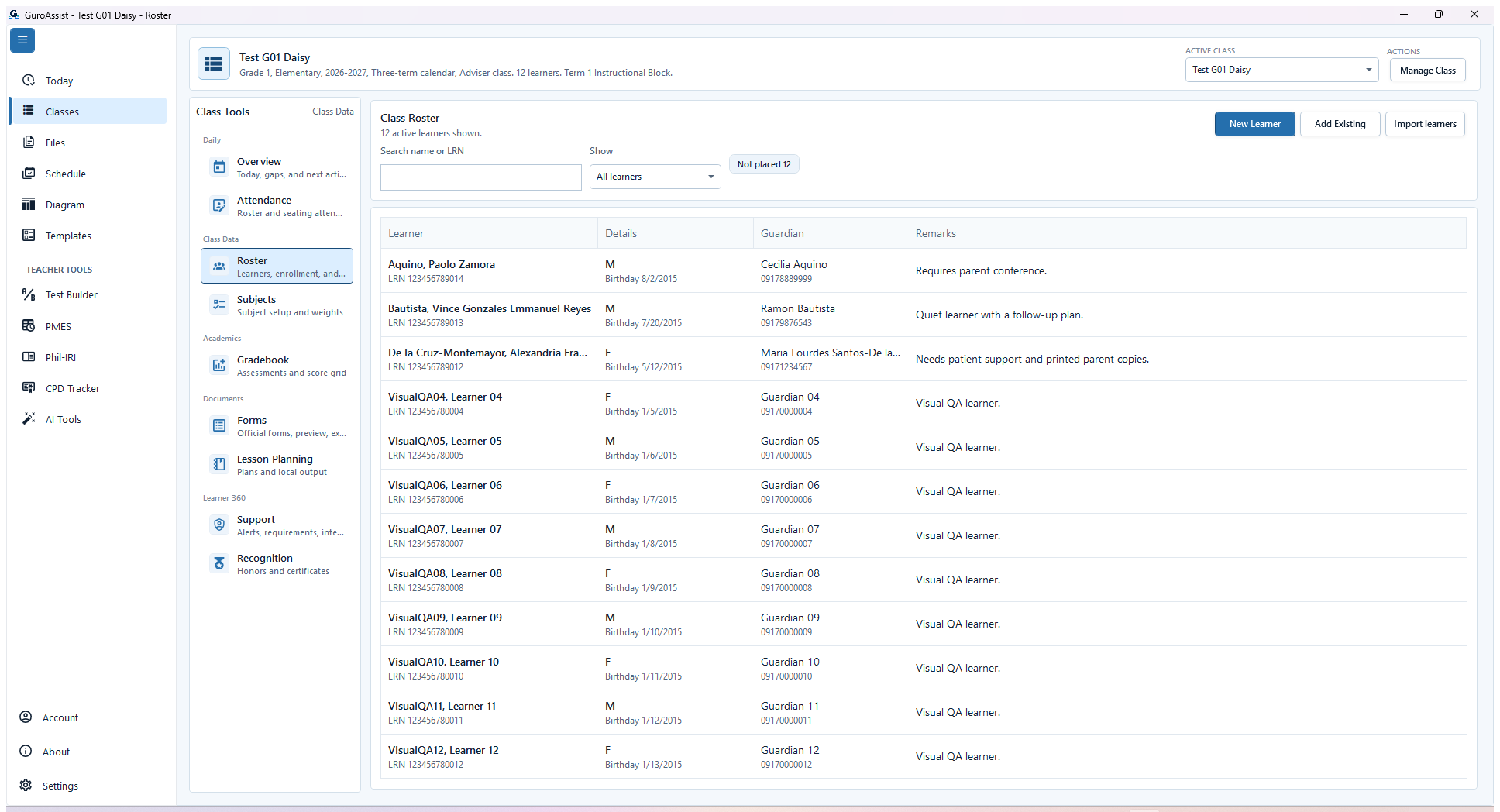
Sample data only. Use the visible active class, learner list, and filters before changing a learner. Captured July 11, 2026. Step 1
Confirm the class, then search or filter the roster
Open Classes, select the class, open its workspace, and choose Roster. Confirm the active class, then use Search name or LRN and Show. No contact and Not placed counts help identify the smallest maintenance task.
 View full size
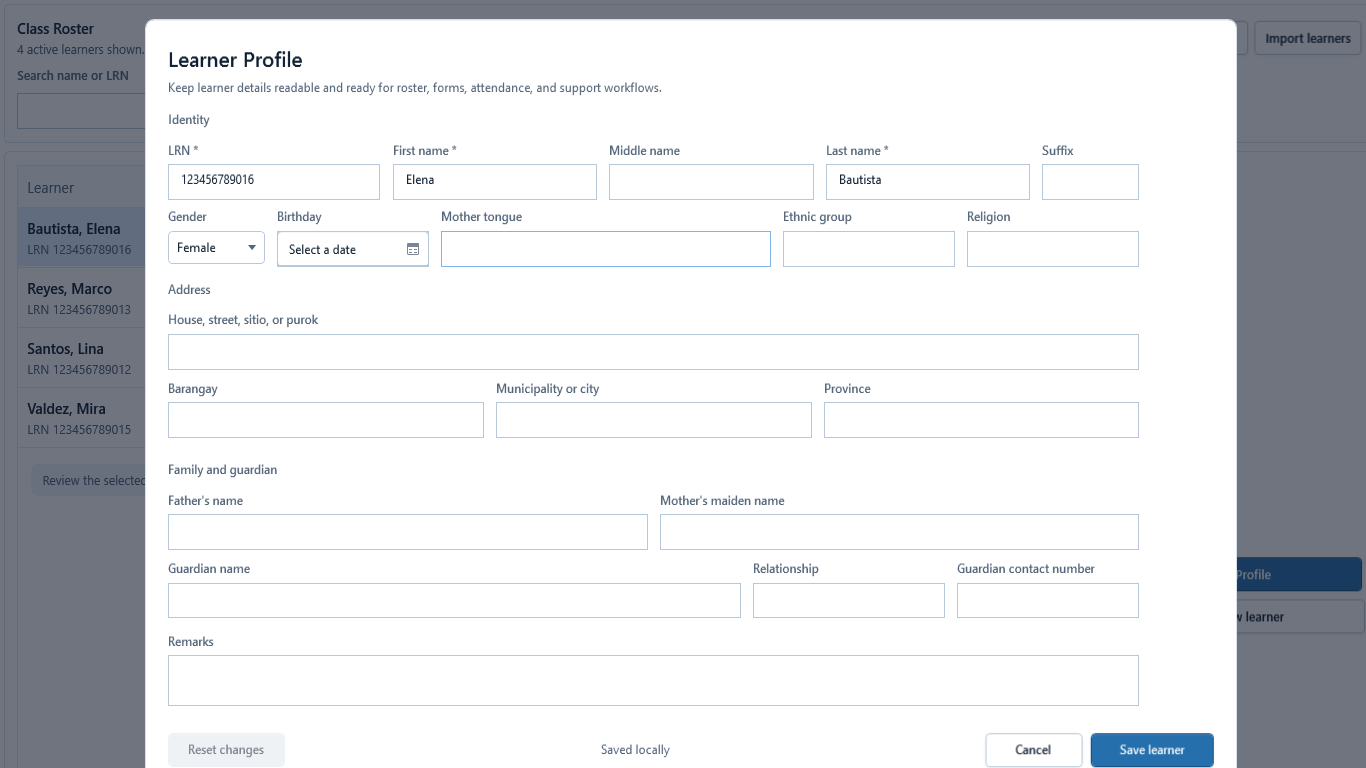
Sample data only. Use the profile dialog for a new learner only after checking for an existing local record. Captured July 11, 2026. Step 2
Create a new local learner
Choose New Learner only when the person is not already saved locally. Enter the required name and supported LRN, sex, birthday, guardian, contact, and remarks fields as available. Choose Save learner only after validation clears.
Search first; a duplicate local learner should be added with Add Existing instead of created again.
 View full size
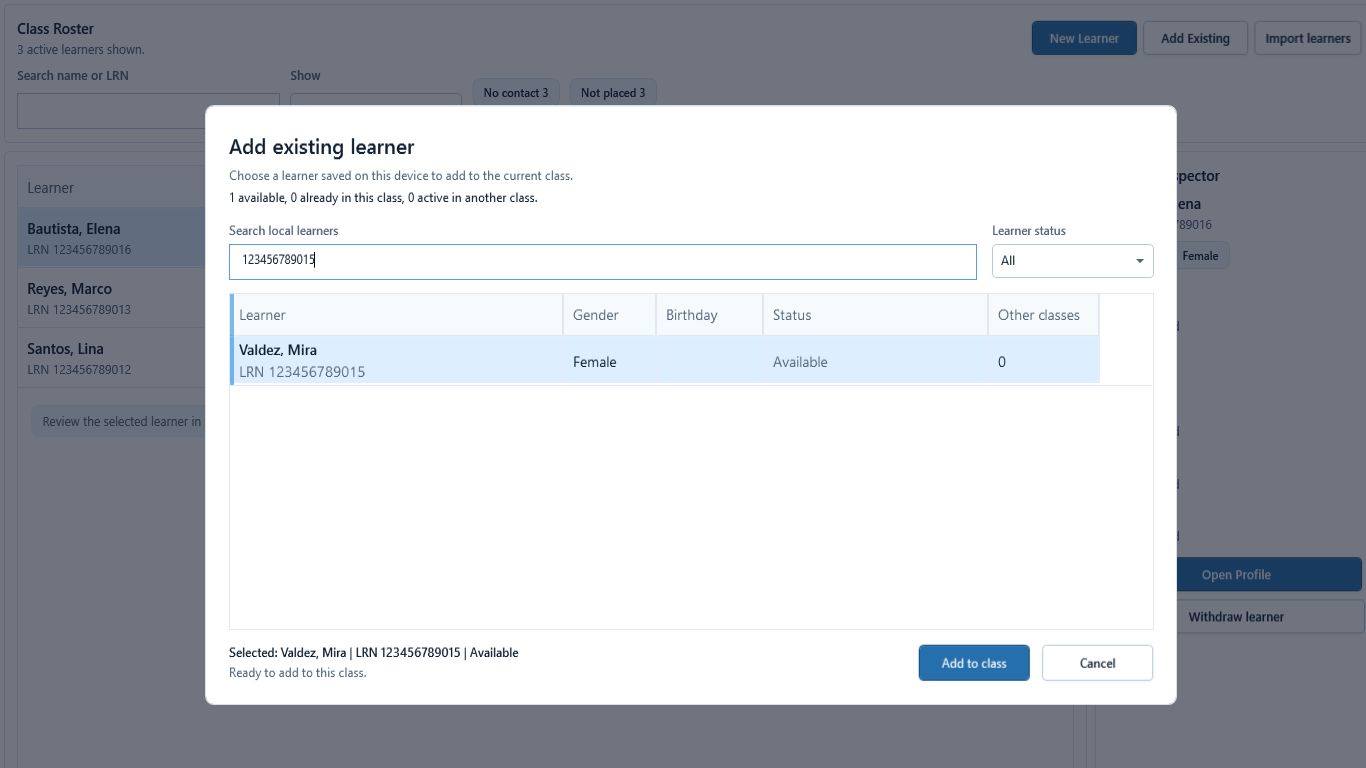
Sample data only. Verify both the learner and placement state before adding. Captured July 11, 2026. Step 3
Add an existing local learner
Choose Add Existing, search by name or LRN, select the verified result, and read its placement message. Choose Add to class only when the learner is available; an already-active learner remains blocked from duplicate placement.
 View full size
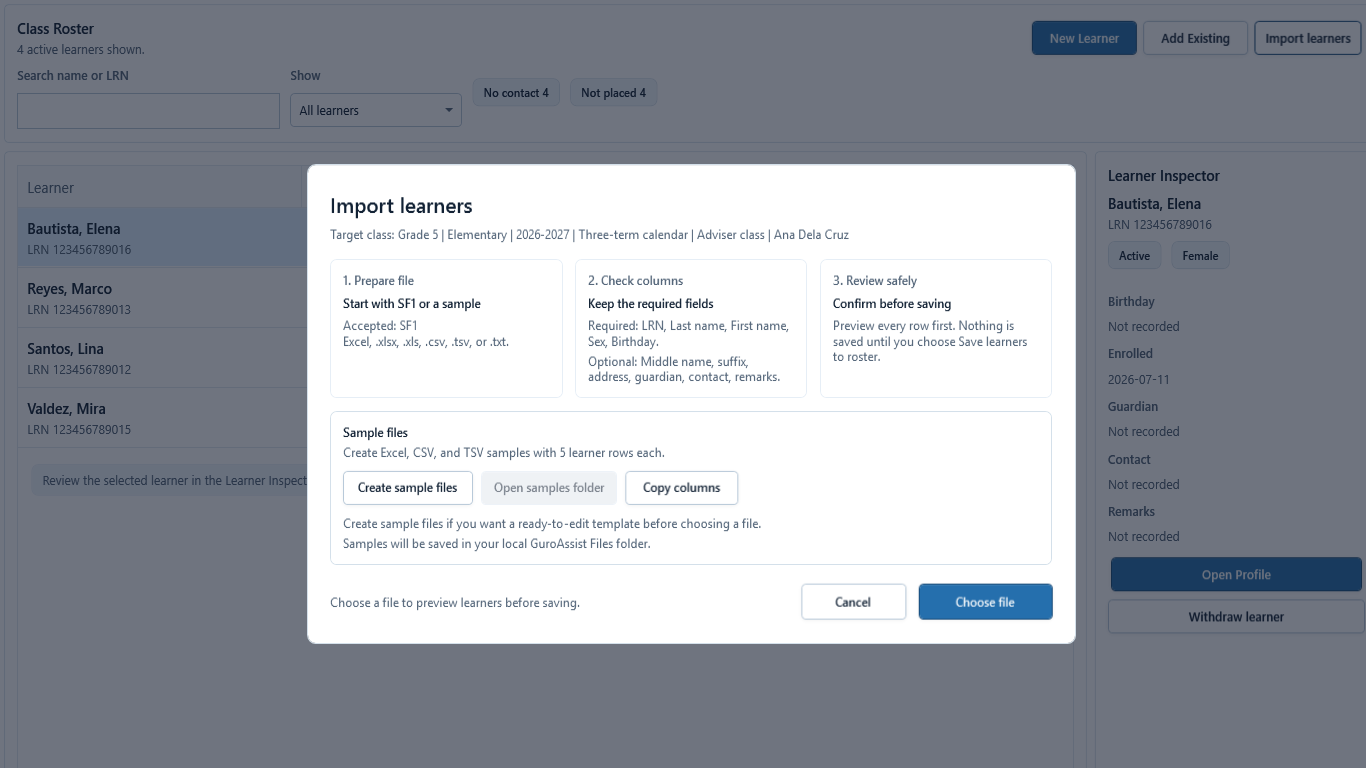
Sample data only. Prepare the file and confirm the receiving class before preview. Captured July 11, 2026. Step 4
Start Import learners with a reviewed file
Choose Import learners. Read the supported Excel, CSV, TSV, text, and SF1 guidance, required columns, and three review stages. Use Create sample files when you need a known format, then Choose file for the intended receiving class.
 View full size
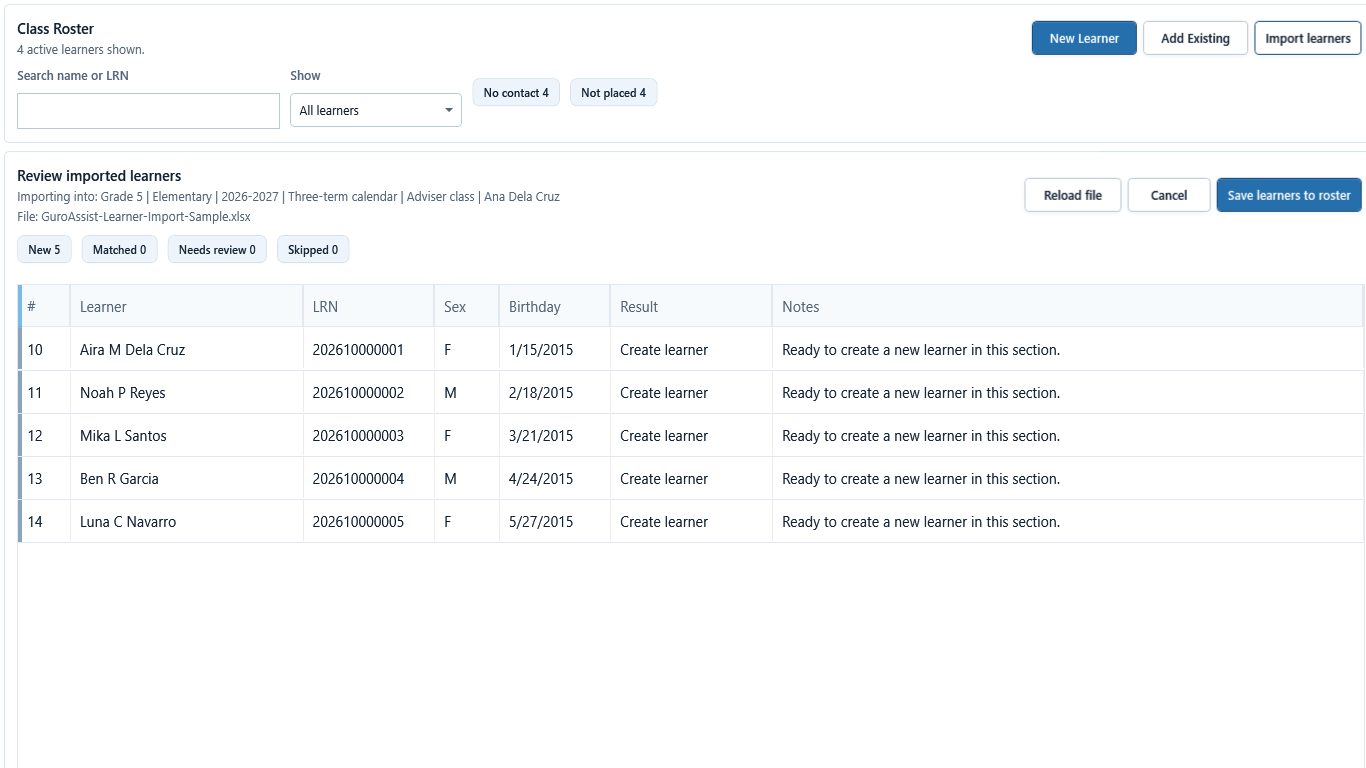
Sample data only. Only reviewed ready rows should be saved. Captured July 11, 2026. Step 5
Review import rows before saving
In Review imported learners, confirm the Importing into class line and source file. Read New, Matched, Needs review, and Skipped counts and every row's Result and Notes. Use Reload file after correcting the source; choose Save learners to roster only when the ready rows are correct.
 View full size
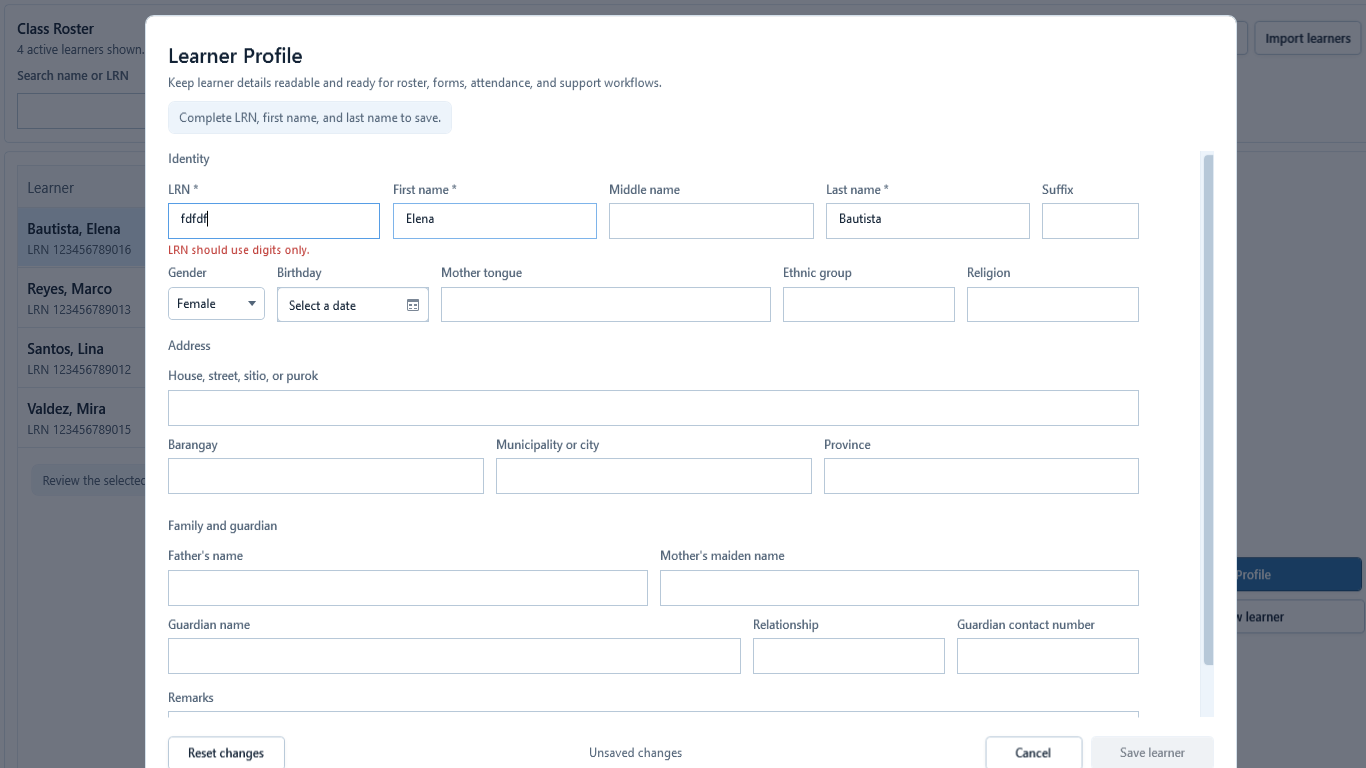
Sample data only. Reconfirm identity and clear validation before editing or withdrawal. Captured July 11, 2026. Step 6
Open Profile and resolve validation before a sensitive change
Select a learner and choose Open Profile. Check the saved identity, required fields, guardian, contact, and remarks. The picture shows an invalid LRN and Unsaved changes: correct the value, use Reset changes to restore the saved record, or Cancel when the source is uncertain. Do not continue until validation clears.
 View full size
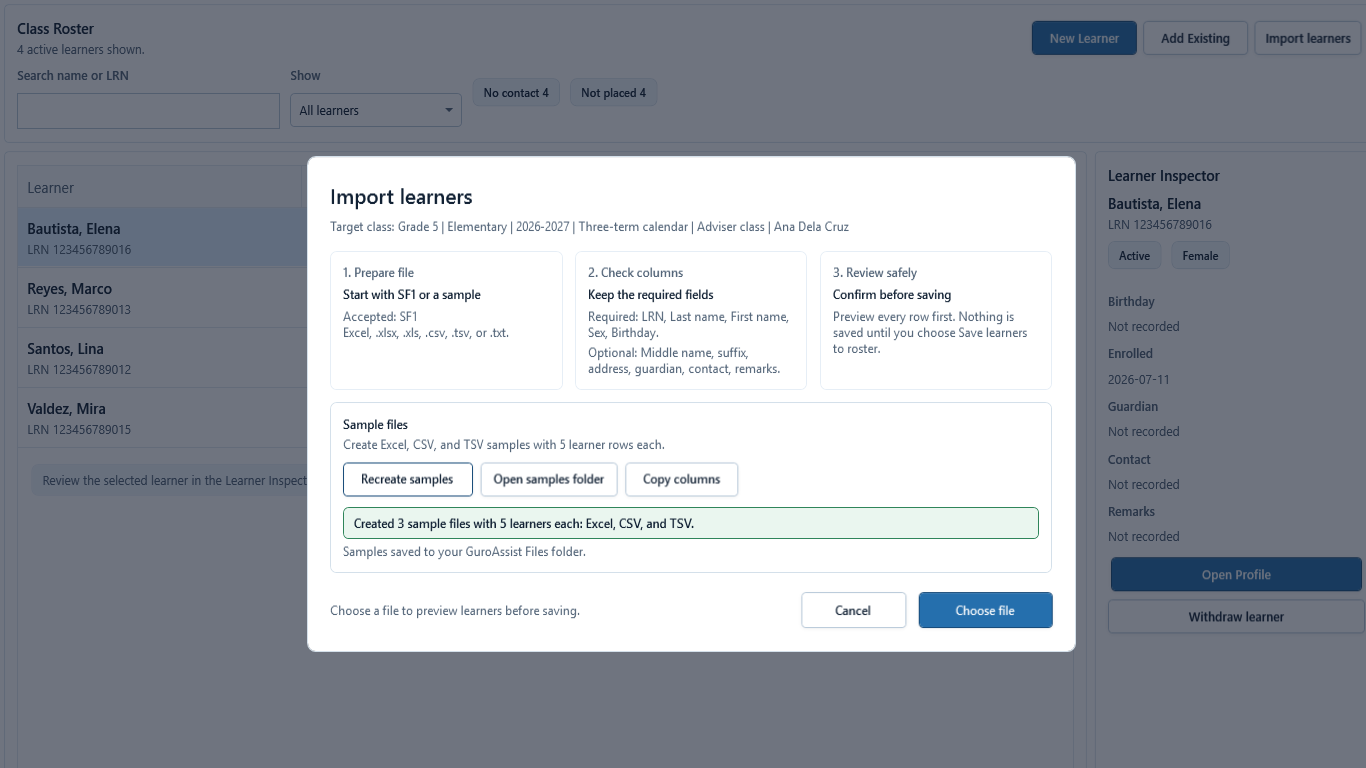
Sample data only. The saved-samples confirmation is the handoff to the separate reviewed import workflow. Captured July 11, 2026. Step 7
Use sample files for a reviewed batch import
For a batch, choose Import learners and Create sample files when a known format is needed. Confirm the Samples saved message and local GuroAssist Files folder, then prepare the file without changing required headers. Profile edits, Add Existing, and Withdraw learner are separate maintenance paths.
 View full size
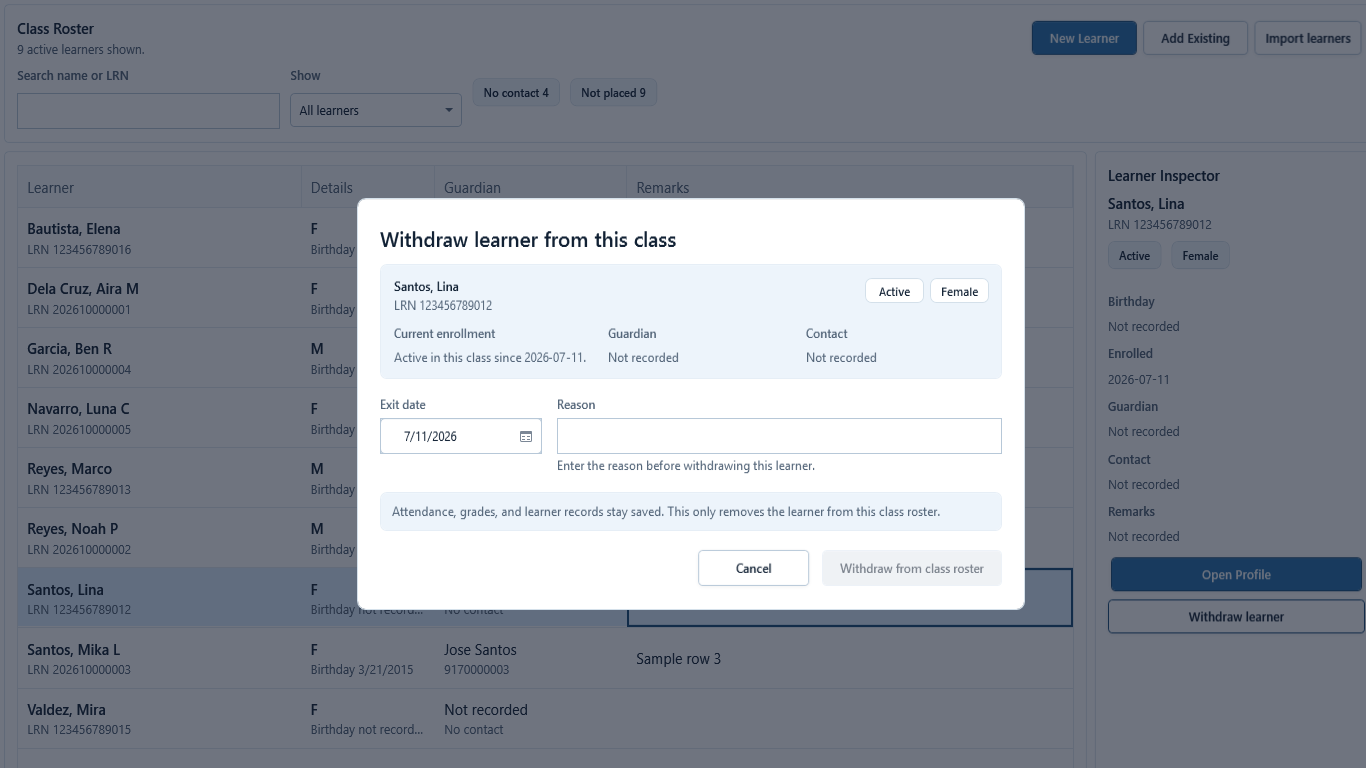
Sample data only. The action removes the learner only from the selected active local roster. Captured July 11, 2026. Step 8
Withdraw only from the selected local class
Select the learner, choose Withdraw learner, verify identity and current enrollment, enter Exit date and a concise Reason, then choose Withdraw from class roster. Cancel when any detail is wrong. This does not make an official enrollment or transfer decision.
 View full size
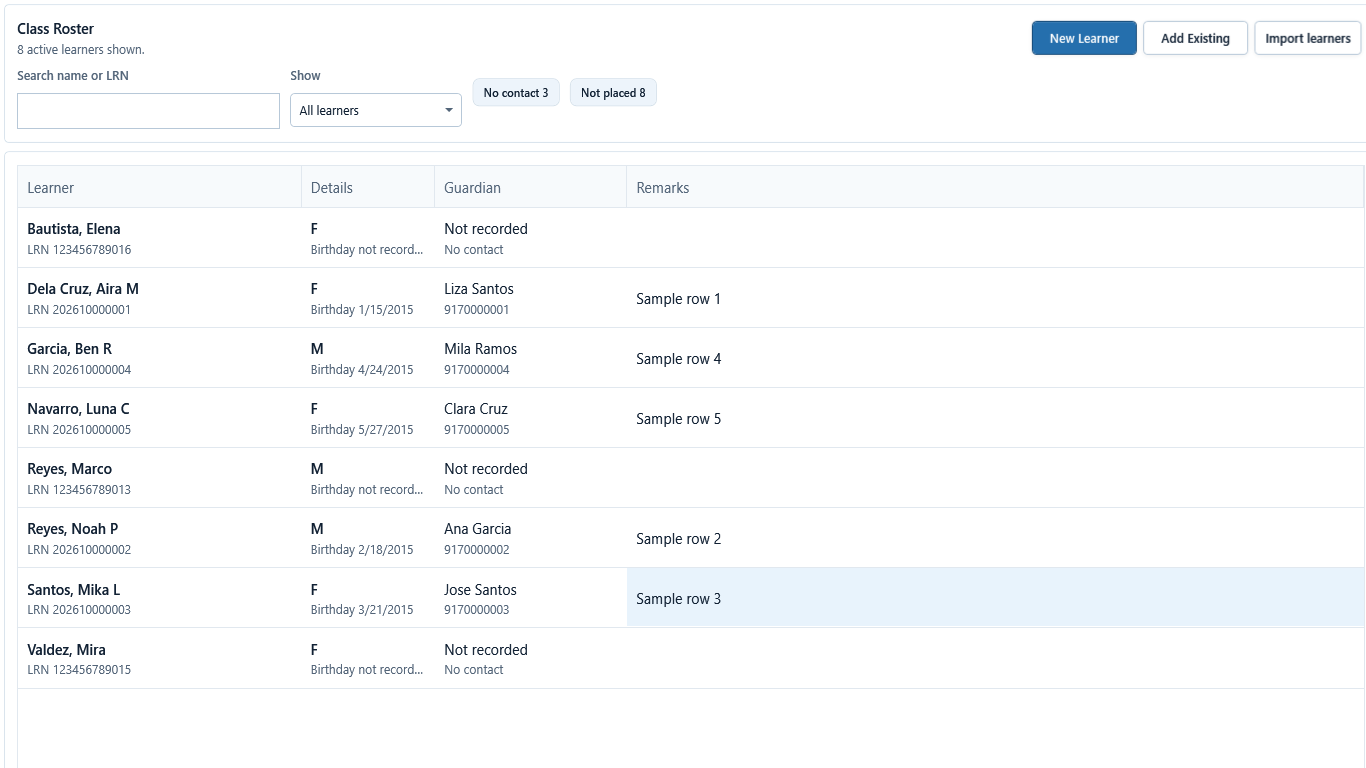
Sample data only. The final active list is the result to verify before relying on downstream work. Captured July 11, 2026. Step 9
Confirm the roster result
Return to the active roster and confirm the created, linked, imported, edited, or withdrawn result. Search for the learner, confirm the active count and placement, and make sure no duplicate active row was introduced. Recheck affected class tools separately when the change could affect them.
 View full size
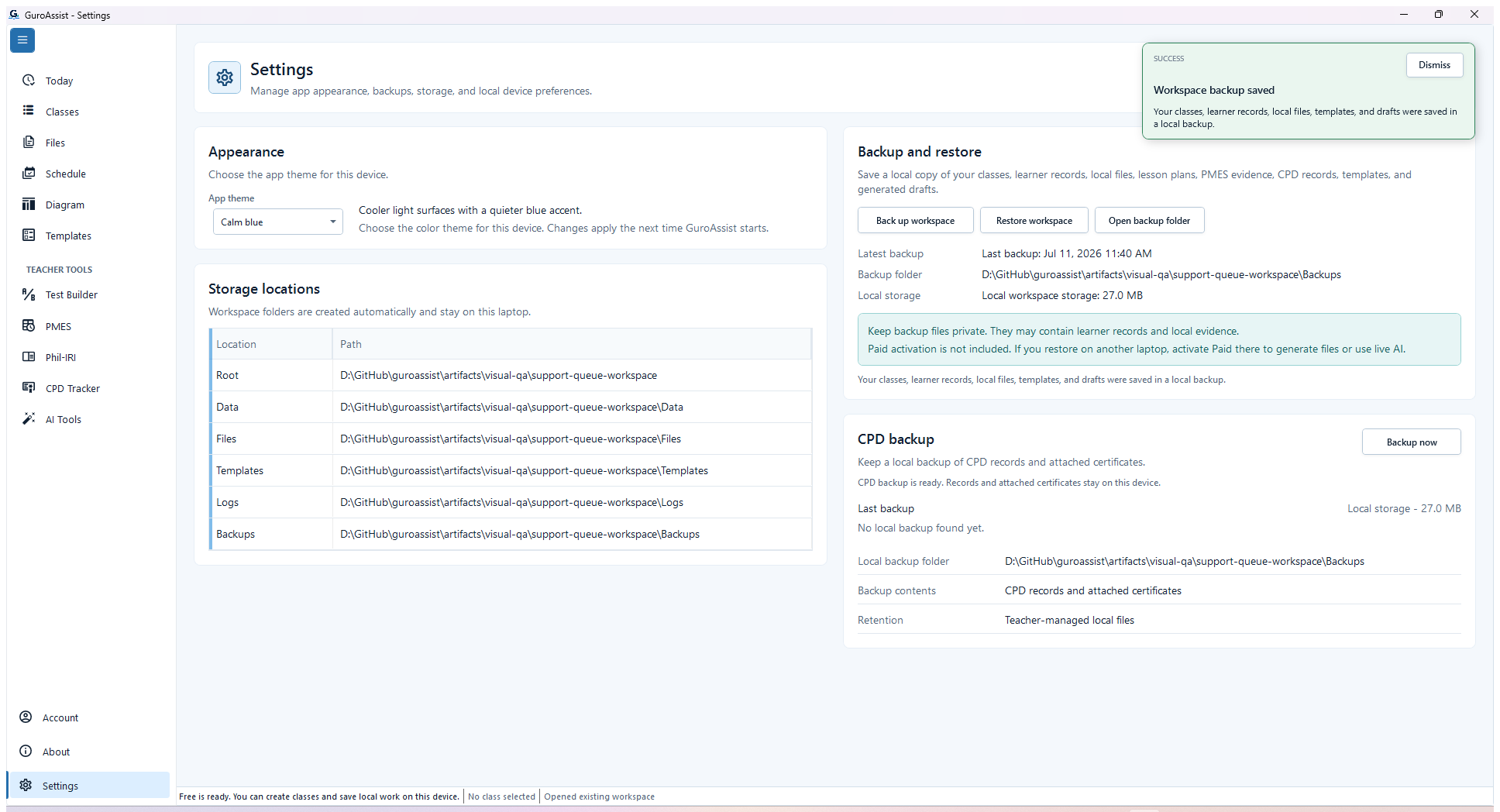
Sample data only. The saved confirmation and updated time are the evidence that the roster backup completed. Captured July 11, 2026. Step 10
Back up after major roster work
Open Settings and choose Back up workspace after a major roster change. Wait for Workspace backup saved and confirm the Last backup time and folder changed before closing Settings.


Review
Check these before relying on the work
These checks cover saved, previewed, generated, and teacher-review states.
Selected class is correct
The Class Roster heading and class workspace match the records being changed.
Existing learners are reused
Search Add Existing before creating a second local record for the same learner.
Import preview is resolved
Only ready rows are committed; created, linked, and skipped results are understood.
Profile details are readable
Names, LRN, status, and required details are checked before dependent tools or outputs use them.
Status changes are reviewed downstream
Attendance, Gradebook, Forms, Learner Support, Recognition, and generated files are checked after a withdrawal or correction.
Blocked states and recovery
Fix the blocker before continuing
Use the direct recovery action when GuroAssist is waiting for setup, data, access, policy, or file readiness.
No class selected
Create or choose a class before adding learners.
After recovery: The intended class appears in the workspace header and the task uses that class.
Review roster helpLearner already active
Add Existing will not add the same local learner to the selected class twice.
After recovery: The intended class appears in the workspace header and the task uses that class.
Review roster helpImport row needs review
Rows with missing required fields, duplicate or ambiguous matches, or unreadable values stay skipped until corrected.
After recovery: The preview shows no unresolved duplicate or matching issue, and only reviewed rows can be saved.
Troubleshoot this blockerNo learner selected
Open Profile and Withdraw learner require a selected roster row.
After recovery: The intended learner is selected and the learner-dependent action is available.
Review roster helpDependent output is not ready
Roster completeness alone does not bypass missing class setup, grades, templates, policy rules, or output review.
After recovery: The intended class appears in the workspace header and the task uses that class.
Review roster help
Safety note
Roster actions maintain teacher-owned local records. They do not perform official enrollment, transfer, school-head approval, or submission workflows.
Finish
Verify the result
Do not treat a saved screen or generated filename as proof that the work is ready.
You’re done when
Roster shows the intended active learners and the selected learner's local profile or withdrawal action.
Glossary
Expand the terms used in this guide
Use the plain-language meaning here, then follow the exact label in GuroAssist.
- SF1
- School Register: class and learner details for review.
Guide details
Guide verification
Use these details to confirm that this guide matches the GuroAssist version and school year you are using.
- Verification
- Verified with GuroAssist 1.0.0.0
- Last reviewed
- July 11, 2026
- Screenshots
- Captured July 11, 2026
- Applies to
- 2026–2027
Was this helpful?
Choose an answer or report a guide that needs attention. No class, learner, or free-text data is sent by these buttons.
Related guides
Continue only where it helps
Import a class roster
How do I bring learner names in without breaking local records?
Withdraw a learner from a local class
How do I withdraw a learner from the local class roster safely?
Create and manage classes and learners
How do I create the right class before adding learners and daily work?
Use Learner Support
How do I keep learner notes, requirements, referrals, and history useful without oversharing?
Back up or restore local work
Protect local records before reinstalling, restoring, or moving laptops.